Ascites is when fluid collects in the belly area (abdomen). Symptoms include swelling of the abdomen and a feeling of pressure. You may also have shortness of breath. In severe cases, your feet, ankles, and legs may also swell.
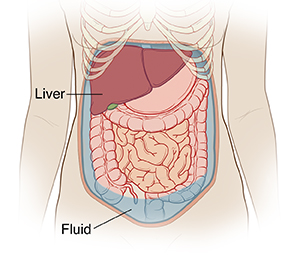
There are many causes of ascites. They include:
-
Cirrhosis of the liver. This is a type of damage to the liver. It is the most common cause of ascites. It may be from the hepatitis B or hepatitis C virus. It may also be from long-term alcohol abuse or from nonalcoholic steatohepatitis.
-
Other diseases. These include heart failure, kidney failure, pancreatitis, or cancer.
To treat the condition, you may need to be on a low-salt diet. Your doctor may prescribe medicines that help fluid leave your body. These medicines are called diuretics. In some cases, you may need a procedure to drain fluid from your abdomen. This is called paracentesis. Ascites fluid often happen again. Sometimes a diuretic (water pill) dosing schedule is started or adjusted to help remove excess salt and fluid through the urine. If the fluid becomes infected, you will need to take antibiotics.
If you have liver damage due to alcohol, stopping all alcohol will help slow the progress of the disease. If you have liver damage from hepatitis B or C, you may have treatments to fight the virus. If you have liver damage that is life-threatening, you may need a liver transplant.
How to say it
uh-SI-teez
Home care
-
Some medicines can make liver damage worse. Talk to your doctor or pharmacist about all medicines you take. Ask them before taking any new medicines. Ask them before you take any supplements, herbs, vitamins, or minerals. Some of these may affect the liver.
-
Talk with your doctor before you take acetaminophen or ibuprofen. Both of these medicines can affect your liver.
-
Stop all alcohol use. If you have a problem with alcohol, talk with your doctor about getting help and support to stop.
-
If you use IV (intravenous) drugs, get help to stop. Never share needles or other drug items.
-
If you have cirrhosis from obesity linked to MASH (metabolic dysfunction associated steatohepatitis, weight loss is an essential part of your treatment. You will also need to exercise and lose weight.
-
Follow a low-sodium diet.
-
Take medicines as directed.
Follow-up care
Follow up with your doctor as advised. Call as directed for results if a culture was done on the fluid, or if you had imaging tests or other tests. Your treatment may change based on the results of these tests.
These resources can tell you more and help you find support:
-
American Liver Foundation at www.liverfoundation.org or 800-465-4837
-
Alcoholics Anonymous at www.aa.org to find an A.A. group near you
When to get medical care
Call your doctor or get medical care right away if any of these occur:
-
Sudden weight gain (more than 10 pounds in 1 week)
-
Increased size of your belly or leg swelling that is getting worse
-
Increasing jaundice (yellowing of skin or eyes)
-
Excess bleeding from cuts or injuries
-
Blood in vomit or stool (black or red color)
-
Trouble breathing (Call 911)
-
Increasing belly pain
-
Confusion
-
Fever of 100.4ºF (38ºC) or higher, or as advised by your doctor
-
Low blood pressure

Related Articles
Mesenteric Adenitis
Mesenteric adenitis is swelling of the lymph nodes in the belly. The problem is often caused by an infection or inflammatory condition of the intestines. Here's how to care for yourself at home as you heal.
Understanding Gastritis
Gastritis is a painful inflammation of the stomach lining. Learn more about the causes and how to ease your symptoms.
What Is a Hiatal Hernia?
This common problem occurs when part of the stomach slides up through the diaphragm into the chest cavity. Hiatal hernias aren't like hernias in your groin. Most hiatal hernias cause no symptoms and need no treatment. If you notice symptoms, usually you can control them easily.
Gastritis or Ulcer, No Antibiotic Treatment
Gastritis is irritation and inflammation of the stomach lining. An ulcer is an open sore in the lining of the stomach. The causes and symptoms of gastritis and ulcers are very similar.