You can help prevent illness and injury by reading the warning label for each hazardous substance you use. If you have questions about the warning label, check the SDS. The SDS has detailed information about the hazardous substance you're using. The image shown here is an example of a National Fire Protection Association (NFPA) label, and its numbers and symbols are explained.
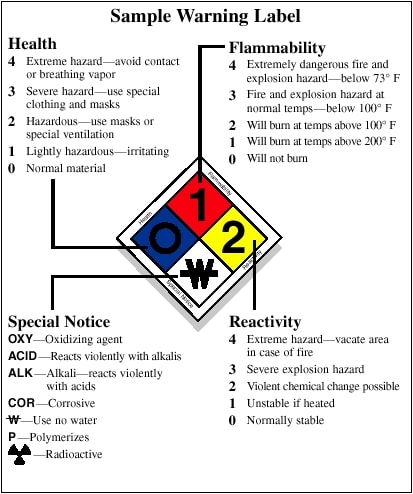
NFPA 704 warning labels
You may see a warning label on a container or on a box of containers. One example is a case of chemical jugs. These labels provide the most important information you need to know about the substance you are handling.
The number system is based on the NFPA 704 rating:
- Hazard ratings range from 0 to 4, with 4 being the most hazardous. These are used for three categories: health (blue), flammability (red), and instability (yellow). For example, if the substance has a low risk for flammability, a “1” may appear in the flammability section.
- The special hazard category shows other important hazards to be aware of. These include OX (oxidizers), W (water reactives), and SA (simple asphyxiant gases, such as nitrogen or helium).

Related Articles
Handling Hazardous Materials at Home
Many common household products contain chemicals that can cause injury or death if they are handled, stored, or used incorrectly.
Water-Safety 101: Basic Guidelines
Every year, thousands of Americans are injured or killed in boating and swimming accidents. You can protect yourself and your family from such accidents by following these guidelines.
Be Careful with Kitchen Knives
With a few cutting-edge tips from experts who use knives for a living -- top chefs -- you can stay away from the biggest danger of kitchen work.
Preventing Falls: How to Prepare and What to Do
Falling is not something you want to think about. But it can make a big difference to plan ahead. If you're prepared, you'll know how to get help. And you'll be less likely to panic if you fall. This means you'll be able to do what's needed to get help right away.