Chemotherapy can decrease the number of red blood cells in your body. When you have fewer red blood cells than normal, it's called anemia. Anemia can have many symptoms. Talk to your healthcare provider if you have any of the symptoms listed here. You may need treatment.
What is anemia?
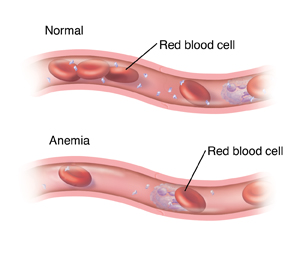
Anemia is when your blood does not have enough red blood cells in it. Red blood cells make up 36% to 40% of normal blood. Hemoglobin is the iron-rich protein in red blood cells that carries oxygen. Hematocrit is the percentage of blood that is made up of red blood cells. If you have anemia, your red blood cell count (hemoglobin or hematocrit ) is below normal. The blood then can’t carry as much oxygen all over the body. As a result, your body can’t function as well as it should. This can lead to other problems.
Symptoms to watch for
Call your healthcare provider right away if you have any of these symptoms:
-
Trouble focusing
-
Severe tiredness (fatigue)
-
Feeling short of breath or having trouble breathing
-
Fast breathing
-
Fast heartbeat
-
Unable to get or keep an erection (impotence)
-
Feeling dizzy or lightheaded
-
Occasional chest pain
-
Headaches
-
Trouble falling or staying asleep
-
Always feeling cold
-
Pale-colored skin, nail beds, mouth, tongue, and gums


Related Articles
Nutrition During Chemotherapy
During chemotherapy, the energy provided by a healthy diet can help you rebuild normal cells. It can also help you keep up your strength and fight infection. These guidelines can help.
Cancer Care: Controlling Diarrhea
A common side effect of cancer and cancer treatment is diarrhea. This is when you have loose, watery stools or pass stool more often than usual. To help limit this problem, try these tips.
Cancer: Preventing Infections
Chemotherapy and other things can make your body less able to fight off infection. Follow these tips to reduce your chance for infection when you are getting cancer treatment.
At Diagnosis: Emotions
This video will list some common emotions people often experience when given a cancer diagnosis, and will offer some tools that can help you manage the anxiety, shock, and depression that comes along with navigating through this time.