You're starting your last trimester. You'll probably feel your baby moving around more. Your back may ache as your body gets used to your baby's size and length. Take care of yourself, and pay attention to what your body needs.
|
Talk to your doctor about getting the Tdap shot. It will help protect your newborn against whooping cough (pertussis). Also ask your doctor about flu and COVID-19 shots if you haven't had them yet. If your blood type is Rh negative, you may be given a shot of Rh immune globulin (such as RhoGAM). It can help prevent problems for your baby.
|
You may have Braxton-Hicks contractions. They are single or several strong contractions without a pattern. These are practice contractions but not the start of labor.
|

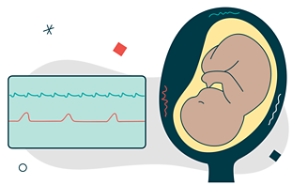
Be kind to yourself.

-
Take breaks when you're tired.
-
Change positions often. Don't sit for too long or stand for too long.
-
At work, rest during breaks if you can. If you don't get breaks, talk to your doctor about writing a letter to your employer to request them.
-
Avoid fumes, chemicals, and tobacco smoke.
Be sexual if you want to.

-
You may be interested in sex, or you may not. Everyone is different.
-
Sex is okay unless your doctor tells you not to.
-
Your belly can make it hard to find good positions for sex. Experiment and explore.
Watch for signs of preterm labor.

These signs include:
-
Menstrual-like cramps. Or you may have pain or pressure in your pelvis that happens in a pattern.
-
About 6 or more contractions in an hour (even after rest and a glass of water).
-
A low, dull backache that doesn't go away when you change positions.
-
An increase or change in vaginal discharge.
-
Light vaginal bleeding or spotting.
-
Your water breaking.
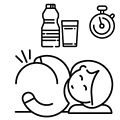
Know what to do if you think you are having contractions.
-
Drink 1 or 2 glasses of water.
-
Lie down on your left side for at least an hour.
-
While on your side, feel the top of your belly to see if it's tight.
-
Write down your contractions for an hour. Time how long it is from the start of one contraction to the start of the next.
-
Call your doctor if you have regular contractions.
Follow-up care is a key part of your treatment and safety. Be sure to make and go to all appointments, and call your doctor if you are having problems. It's also a good idea to know your test results and keep a list of the medicines you take.
Current as of: July 10, 2023
Content Version: 14.0
Care instructions adapted under license by your healthcare professional. If you have questions about a medical condition or this instruction, always ask your healthcare professional. Healthwise, Incorporated disclaims any warranty or liability for your use of this information.
Featured in

Related Articles
Planning a Pregnancy
Planning ahead and taking care of yourself before becoming pregnant is the best thing you can do for you and your baby.
Labor and Childbirth: Your Body Prepares
Learn about the physical changes that often signal that your baby will soon be born.
Folic Acid for a Healthy Baby
Getting enough folic acid can reduce the risk for neural tube defects (NTDs) and may also reduce the risk for other serious birth defects of the brain and spinal cord.
Checking Your Blood Sugar During Pregnancy
The only way to be sure your blood sugar stays within a normal range is to check it. You may be asked to check your blood sugar at home 1 or more times a day.