Pregnancy begins when a woman’s egg and a man’s sperm join. This is called conception or fertilization.
The woman’s role in conception
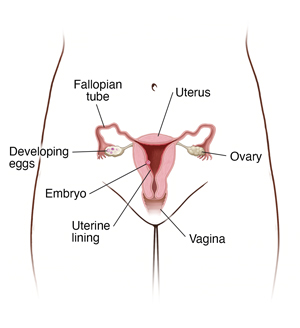
Each month, one of a woman’s ovaries releases a mature egg (ovulation). The egg travels to the fallopian tube. If sperm are present, one of them may join with the egg to form an embryo. The embryo then travels to the uterus. There, it implants in the uterine lining, where it grows to become a baby. If conception doesn’t occur, the egg and the uterine lining are shed during your period (menstruation). A new cycle begins.
The man’s role in conception
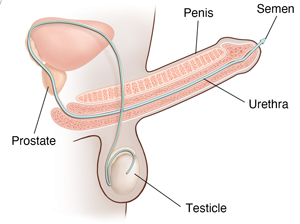
Sperm are made in a man’s testicles. Fluid made by the prostate gland combines with sperm to form semen. During a man’s orgasm, semen flows to the urethra and out of the penis (ejaculation). If the semen was ejaculated in or near a woman’s vagina, sperm may travel into the uterus and the fallopian tubes. There, a sperm may join a mature egg to form an embryo. This results in pregnancy.

Related Articles
Understanding Vulvoplasty
During a vulvoplasty, the outer female genitals are created. This includes the clitoris and inner and outer labia. Learn more about this procedure and the recovery.
Understanding Types of Health Care Facilities
Getting quality health care doesn’t always mean going into the hospital or emergency room. Depending on your needs, other medical facilities may serve you just as well—or even better.
High Cholesterol (Hypercholesterolemia)
High cholesterol is called hypercholesterolemia. Cholesterol and dietary fat are not the same thing. It's important to understand how the fat in your diet affects your cholesterol levels.
Orthostatic Low Blood Pressure (Hypotension)
Learn about orthostatic hypotension, including causes, symptoms, and how to care for yourself.