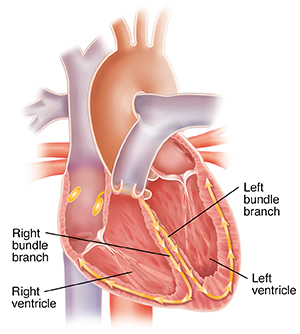
Left bundle branch block is a problem in the heart’s electrical system. The heart has 2 main pathway that cause the heart to contract. They are called bundle branches, and they connect the top and bottom chambers of the heart. In left bundle branch block, the left bundle branch doesn't work correctly. This causes the left lower heart chamber (ventricle) of the heart to squeeze later than normal.
Types of treatment
If you have no symptoms or other heart problems, you may not need treatment. If you have symptoms or other heart problems, you may need treatment, such as:
-
Pacemaker. A device is put into your chest to help your heart pump normally using wires placed in the heart.
-
Cardiac resynchronization therapy (CRT). A special pacemaker is put into your chest with wires controlling both left and right ventricles. It helps the lower chambers of the heart (ventricles) pump normally. CRT may be used if you have heart failure and left bundle branch block.
Possible complications of left bundle branch block
People with no symptoms and no other heart problems are unlikely to have complications. In other cases, complications may include:
-
Heart failure
-
Dizziness or fainting from low heart rate called heart block
-
Heart that stops beating (cardiac arrest)
Living with left bundle branch block
You can help manage your condition. Make sure to:
-
Tell all of your healthcare providers you have this heart condition.
-
Tell your healthcare provider if you're prescribed new medicines, especially heart-related ones.
-
Tell your healthcare provider about all medicines you take, including prescription and over-the-counter medicines, vitamins, herbs, supplements, and illegal drugs.
-
Keep track of your symptoms carefully.
-
See your healthcare provider regularly, even if you don’t have symptoms.
-
Control your cholesterol, blood sugar, and blood pressure levels.
-
Eat heart-healthy foods.
-
Limit the amount of salt in your diet.
-
Be physically active.
-
Quit smoking, if you smoke.
When to call 911
Call
-
Chest pain
-
Fainting
-
Severe trouble breathing
When to call your healthcare provider
Call your healthcare provider if you have either of these:
-
Symptoms that get worse
-
New symptoms


Related Articles
Treatment for Premature Ventricular Contractions (PVCs)
Premature ventricular contractions (PVCs) are a type of abnormal heartbeat (arrhythmia). They are very common. They can occur in people of all ages from time to time. They usually cause only mild symptoms.
Treating Syncope: Helping Your Heart
If heart trouble caused your fainting, treatment may improve blood flow, stop syncope, and help prevent further heart problems. Your healthcare provider can explain the benefits and risks of each treatment.
Understanding Temporary Cardiac Pacing
A pacemaker helps your heart beat normally by taking over the electrical signals in your heart. Learn about the types of temporary cardiac pacing, how they are done, and the risks involved.
Cardiac Procedures
These procedures are often used in the evaluation and treatment of cardiovascular disease.